What if a forest could grow snacks & drinks?
Food forests have a lot going for them. They improve biodiversity and soil quality, need little external input and produce food without the monocultures or pesticides of conventional agriculture. But they tend to have a bit of an image problem…
Healthy. Organic. Sustainable. “Interesting flavours”. Difficult to cook. Perhaps a little idealistic. Great if you’re already into that sort of thing. But what about everyone else?
Instead of trying to convince more people to love food forests, what if we would design a forest that more people would simply love? The result: the world’s first snack forest, or as we say in Dutch: Borrelbos.


De Goeie Bos
The world’s first snack forest is growing in Dongen, the Netherlands, on a plot of land owned by farmers Paul, Judith and Frank Kimenai. Their family has been farming here for generations, and the land has long been known as ‘De Goeie’, Dutch for ‘The Good’.
A fitting name for a forest designed to produce good things. With such name, harvest’s won’t just be drinks and snacks, they’ll be good. Think of good beers, lemonades, ciders, accompanied by good croquettes, spreads, fries, pickles and nuts. Its harvest will not just become beer, cider and lemonade, but also croquettes, spreads, fries, pickles and nuts.
In other words: this food forests support the good life, both in terms of biodiversity and human (guilty) pleasure. Because this forest offers junk food that isn’t exactly garbage, processed food that’s actually well processed and drinks that get you wasted, without creating waste. Cheers!

Designing a snack forest
De Goeie Bos was designed from the ground up. Literally. Starting with the soil: what could grow where, in which conditions and in which combinations? From there, botanical possibilities were connected to recipes for snacks and drinks, and translated into a planting plan for the forest.
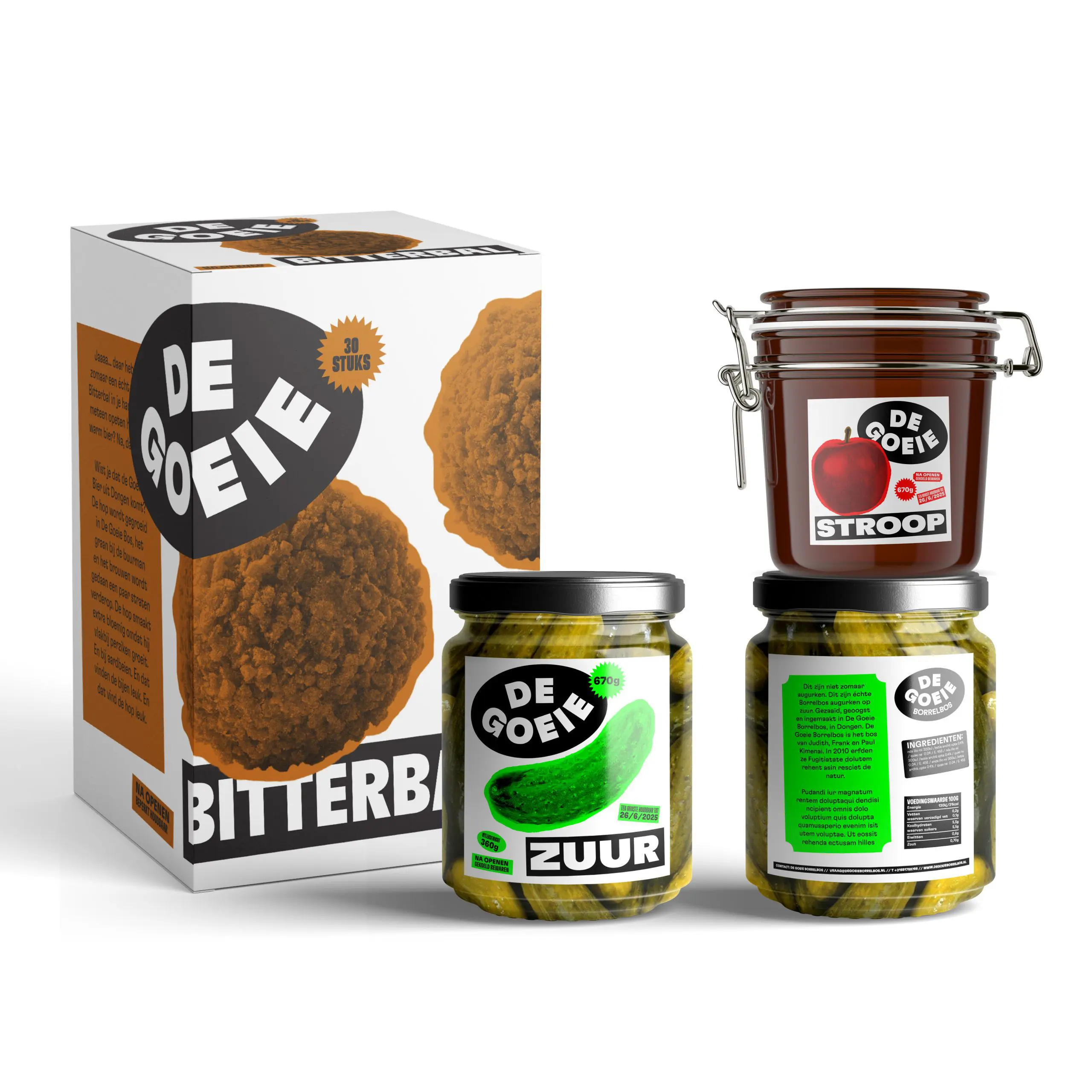
So instead of simply deciding which trees to plant, the forest was designed with its future menu in mind. Bitterballen made with chestnut flour, a nut mix containing ‘forest peanuts’, pickled forest fruits and Szechuan sour cherry chutney, for example.
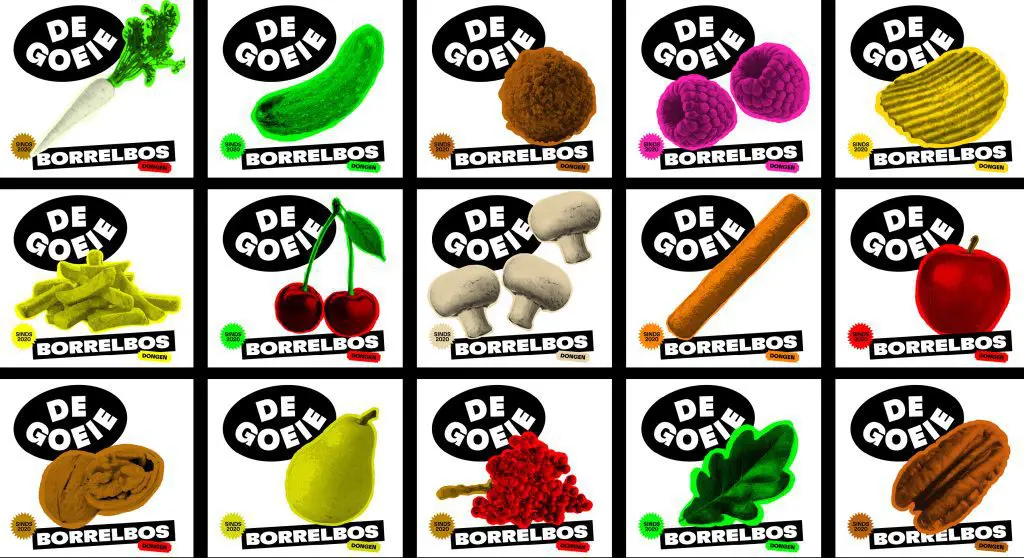
But the design didn’t stop at the plants. The same idea shaped the identity and the products that would eventually come out of the forest. From the layout of the land to the labels on its products, the forest and its identity were designed as one system.


Cheers to waiting a few more years
Growing a forest takes time. The first trees and plants were planted in 2020. It will take around 20 years before De Goeie Bos has grown into the snack forest it was designed to become. Follow them to stay up to date.


Credits
Concept: Maartje Slijpen & Merel Witteman
Food forest design: Merel Witteman
Visual identity: Maartje Slijpen
Made in the context of: Landgoed de Goeie, Dongen.